Silence is the most underrated feature in a car. Inside a HALDEN, the noise of the city drops away and what is left is room: for a song, a thought, a conversation. Each film takes one kind of sound and lets it reshape the world outside the glass.
A school run where the city starts playing along to one song.
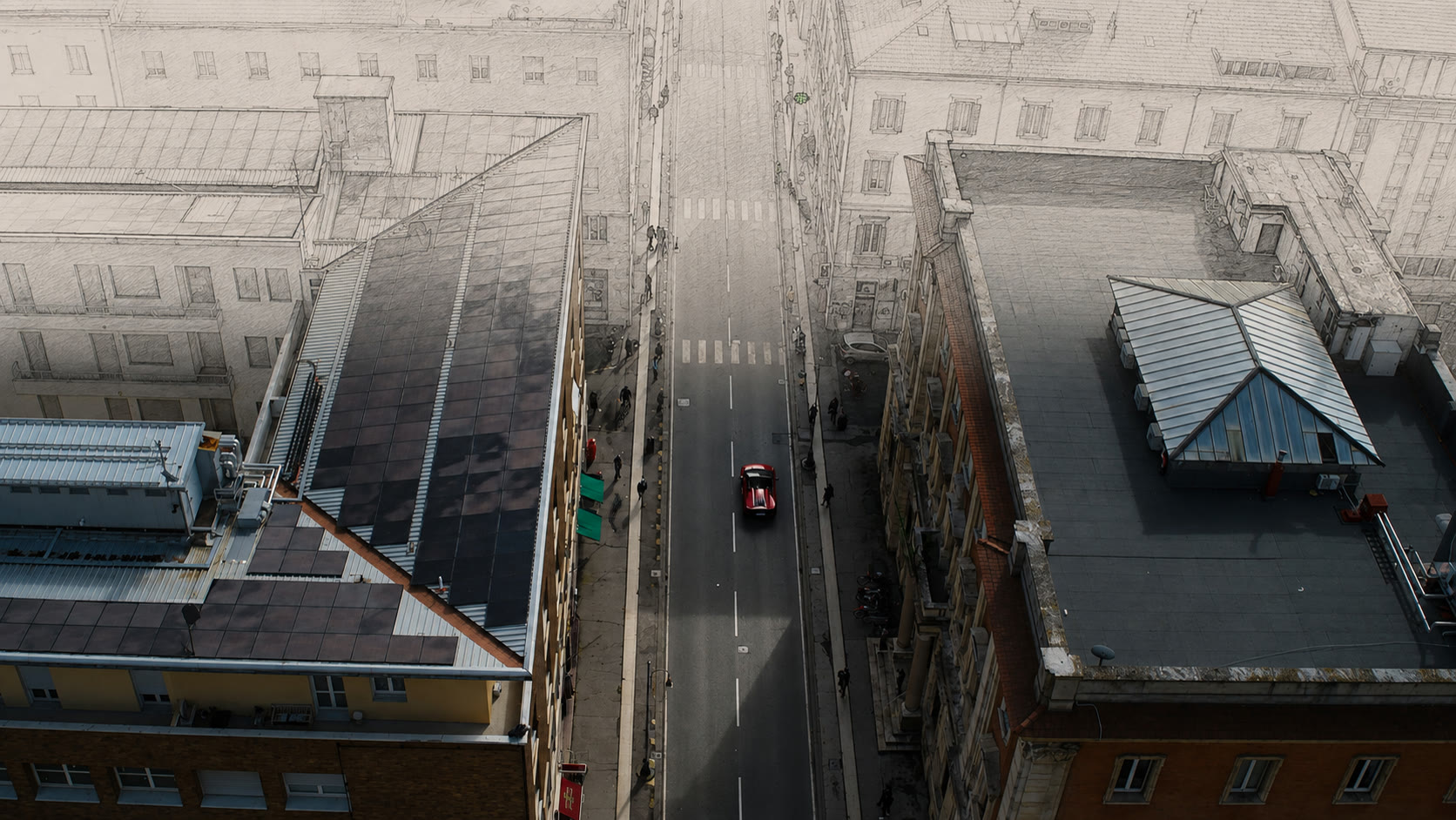
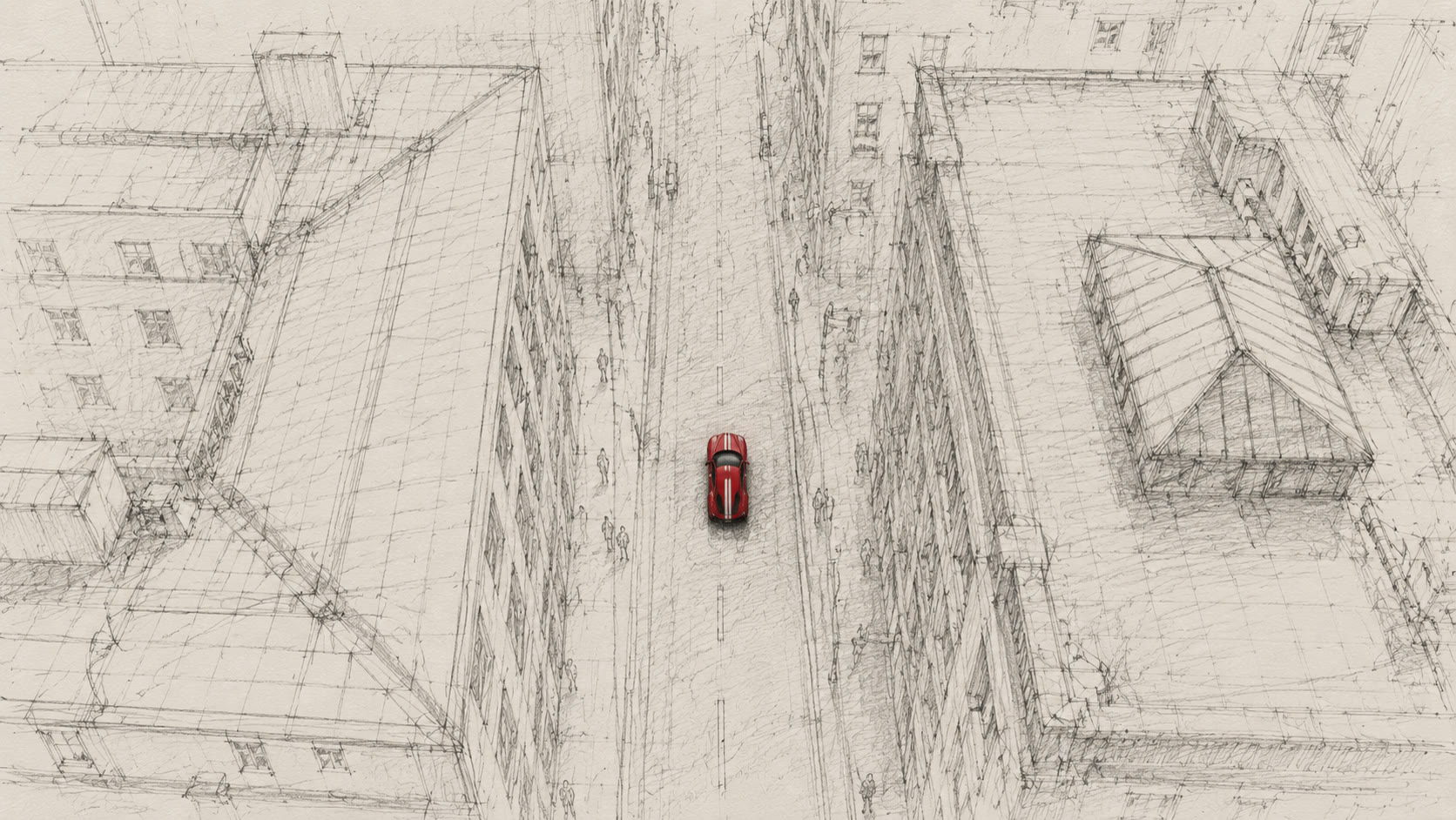
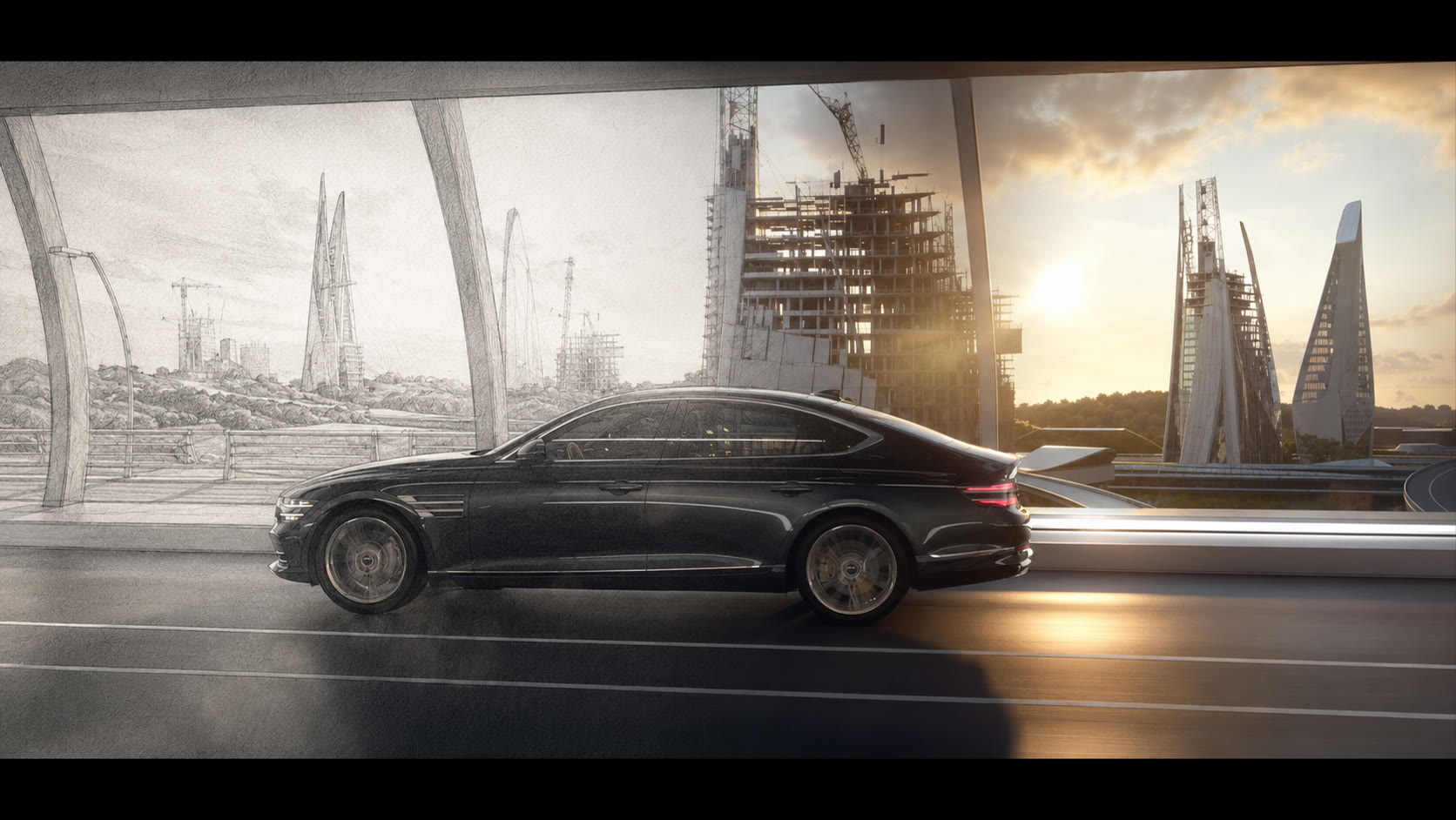
A late drive where every new instrument adds a layer to an unfinished city.
The music stops, and the world turns out to have its own soundtrack.
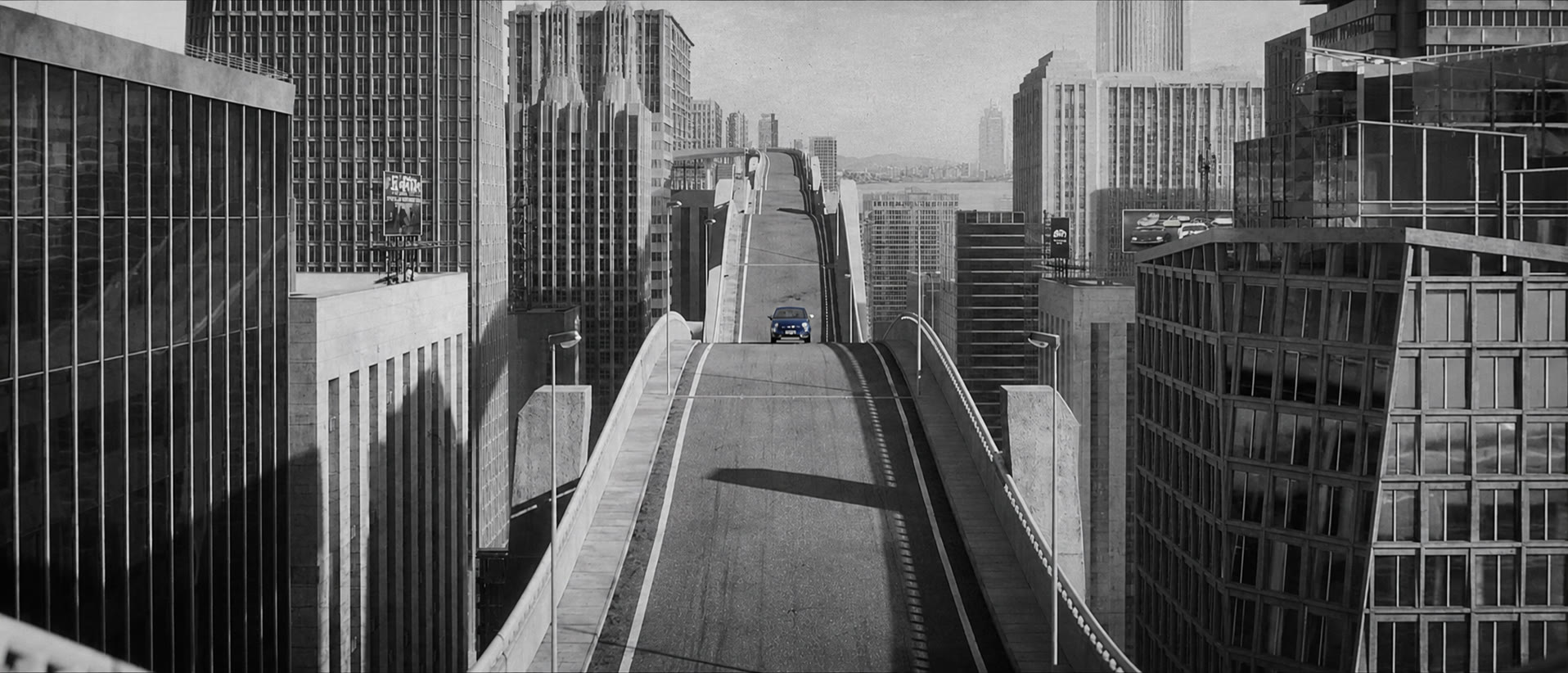
Tune the World is about the moment the city stops being noise and starts sounding like music.
Every HALDEN cabin is engineered for quiet. The doors close, the outside world drops to a whisper, and for once you get to decide what the soundtrack of your day sounds like.
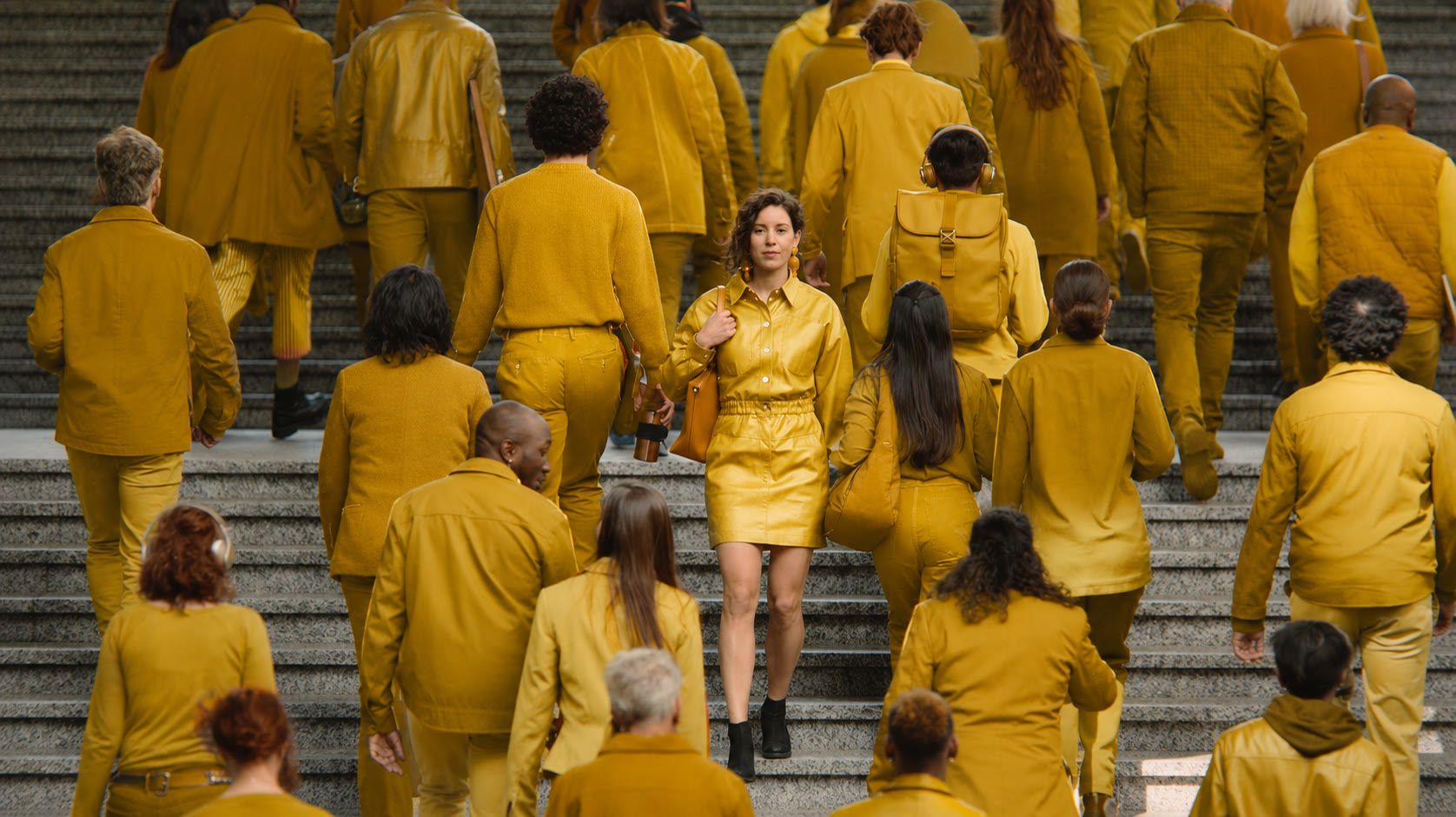
The film takes that idea literally. A mother and her daughter on the school run, stuck in a city of drills, horns and shouting. The daughter presses play, and from the first beat the street stops competing with them and starts keeping time.
The world can go as big as the music. The performances stay small, real and slightly off-beat.
The daughter is our conductor. She doesn’t dance so much as keep time: fingers tapping the window, shoulders catching the snare, hands drawing the melody in the air.
The mother starts the drive somewhere else, running late and half-listening. We watch her resist the song, catch herself tapping the wheel, then finally give in.
Every sound in the opening becomes an instrument by the end. We design the mix and the picture together, so the edit is cut to the song and not the other way round.
The school gate at 8:14. A drill bites into concrete, a delivery truck reverses, a hundred conversations overlap. We cut in fragments, one sound per shot, all slightly out of time with each other.
Mom checks her phone, her keys, the clock. Her daughter is already talking.
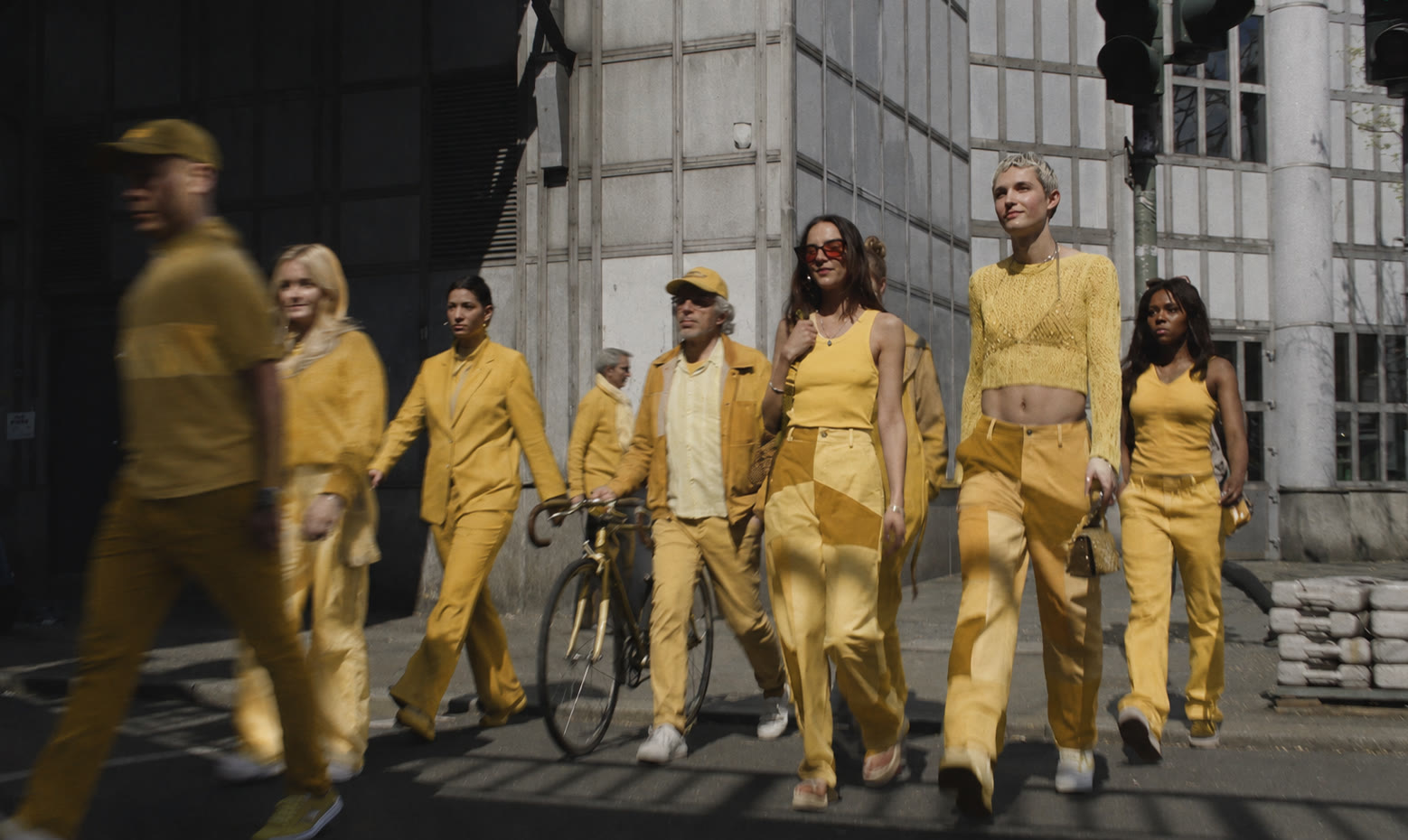
The doors close and the city drops to a hush. She presses play. On the first kick drum, a pedestrian’s step lands exactly on the beat, then another, until the whole crossing moves in tempo.
When the brass comes in, yellow floods the street: coats, taxis, umbrellas, the light itself.


A gust catches a stack of flyers outside a print shop. Hundreds of sheets lift into the air and every one of them lands on the snare.
We go high and wide: the HALDEN moves calmly through a paper storm that is somehow perfectly in time. Inside, Mom is trying not to smile.
The song builds. The daughter counts it in on her fingers, three, two, one, and on the drop every hydrant on the avenue erupts at once.
Arcs of water cross above the car, shot practically at high frame rate so each droplet hangs in the light. Mom finally taps the wheel. On the beat.
They pull up at the gate as the last chord rings out. The noise rushes back in the moment the door opens, but something has changed: the drill, the truck, the chatter all sound a little like music now.
Layers is about how an idea gets built, one track at a time.
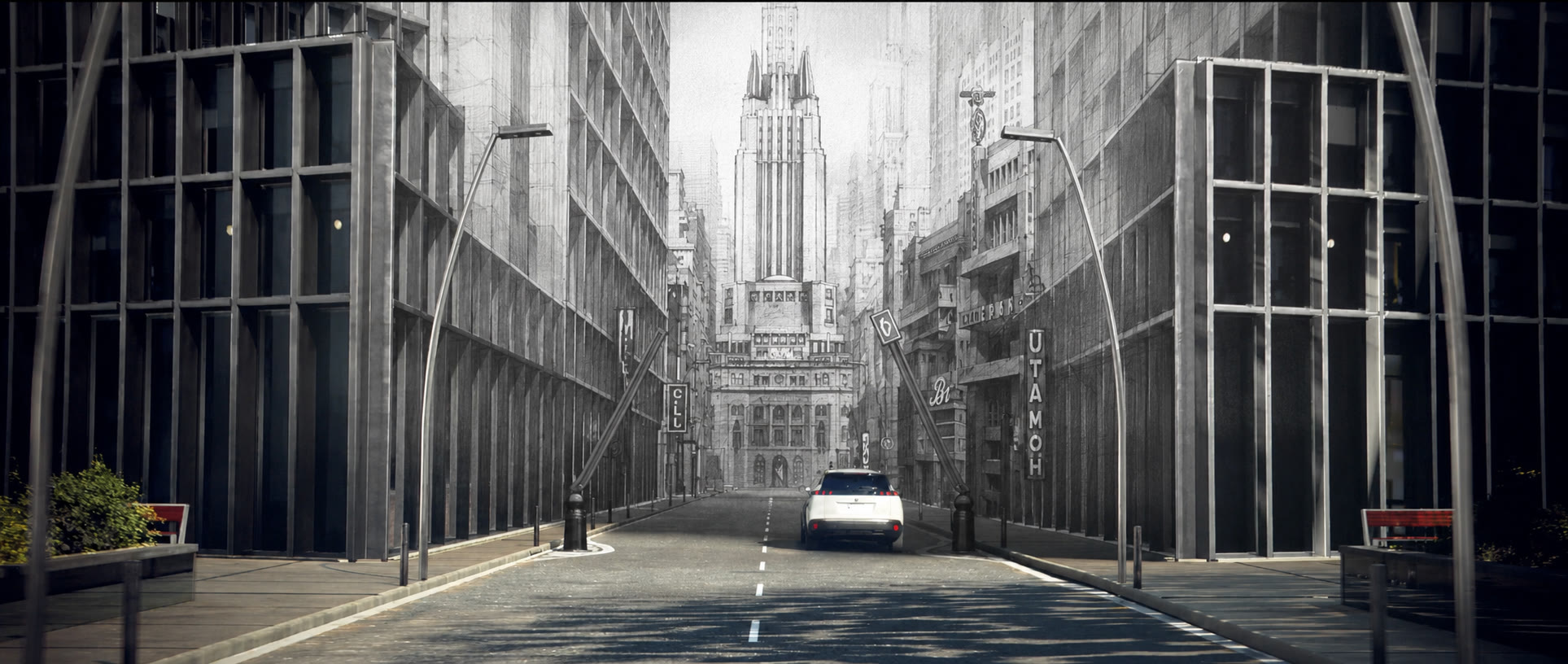
A songwriter drives home with a melody she hasn’t finished. Outside, the city looks the way her song feels: sketched, incomplete, waiting.
Every time she adds a part in her head, first bass, then strings, then voice, the world beyond the glass gains another layer, until the city and the song are finished at the same moment.
Performance lives in the hands and eyes: humming under her breath, fingers finding chords on the wheel.
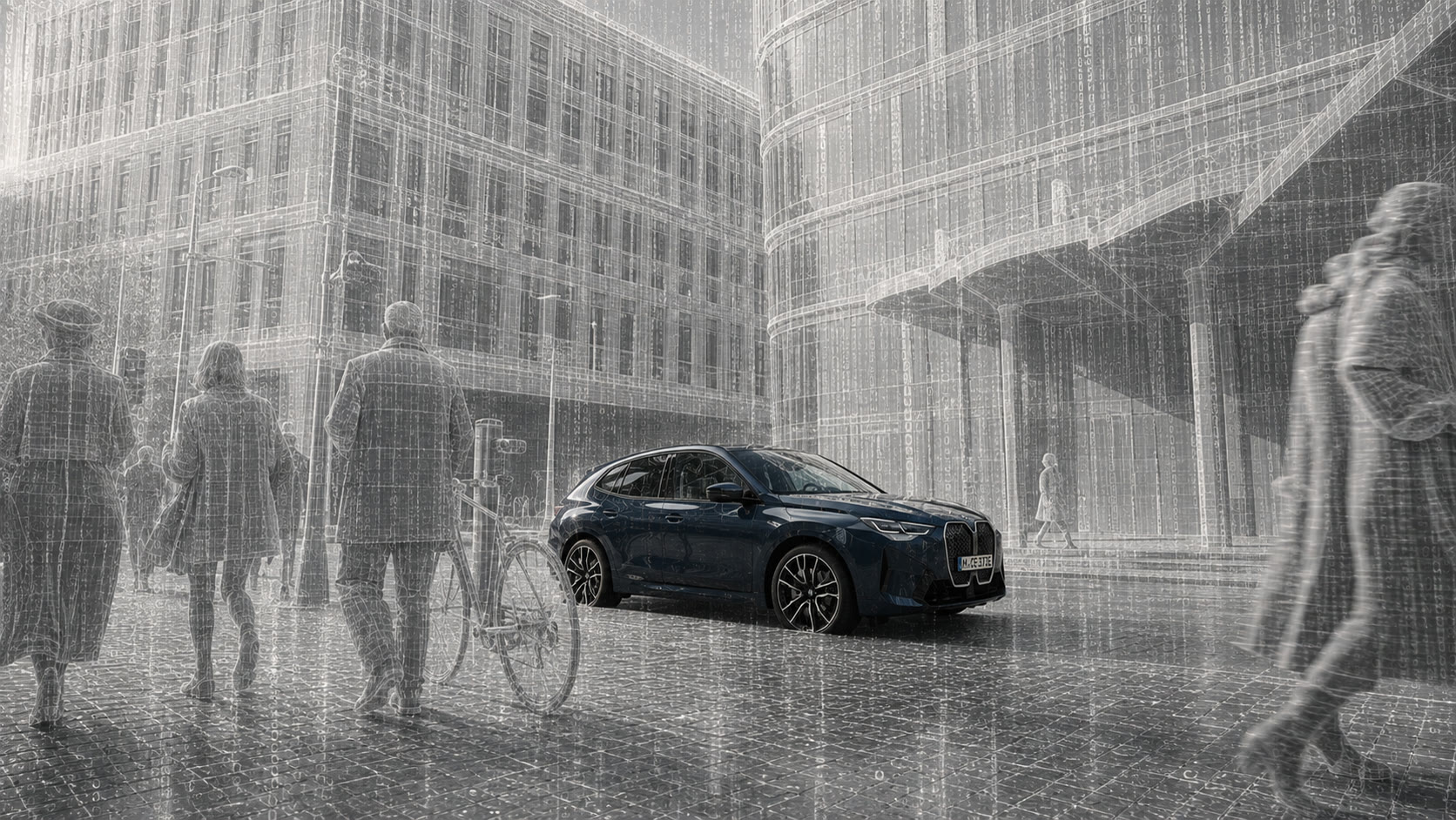
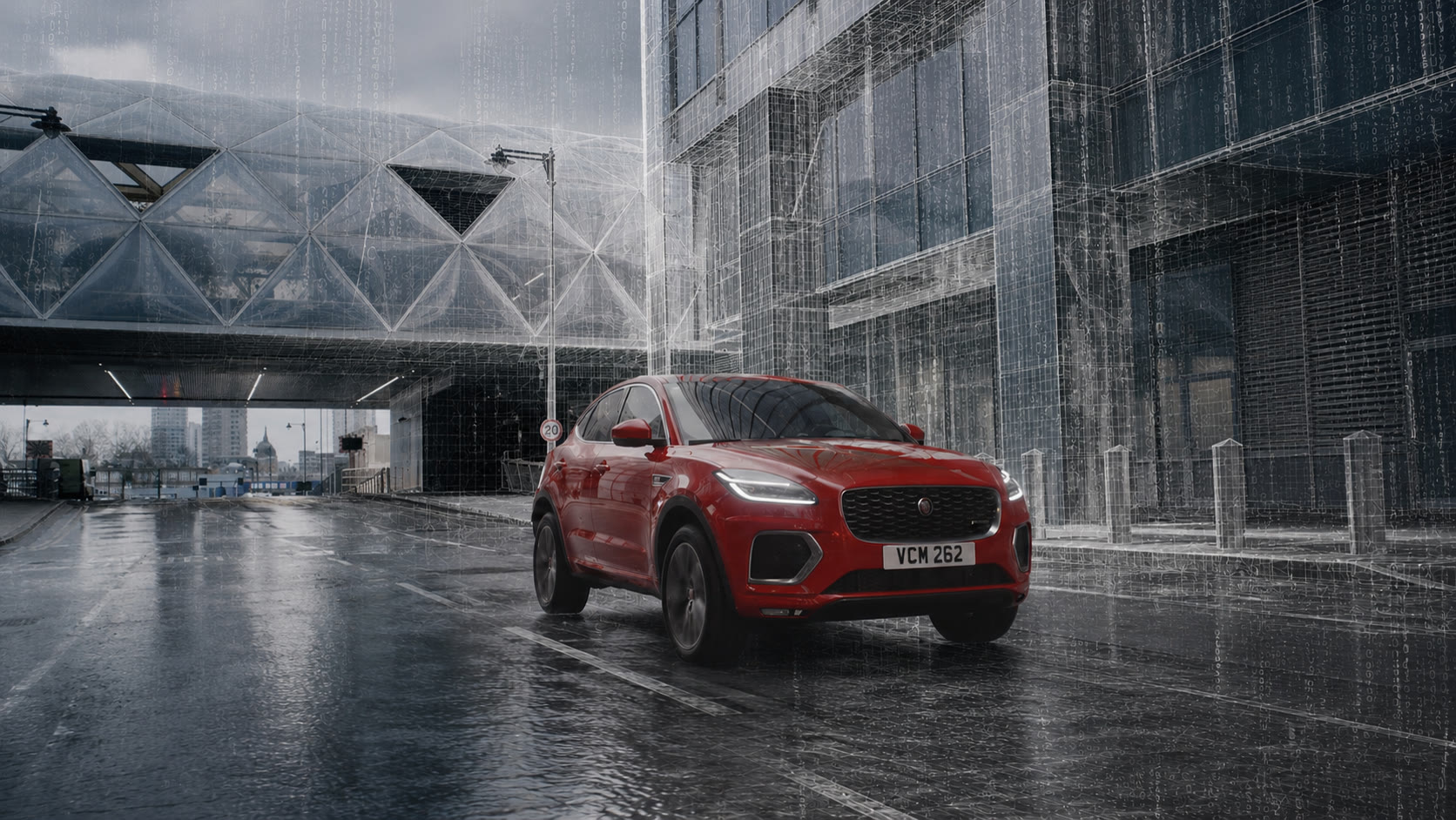
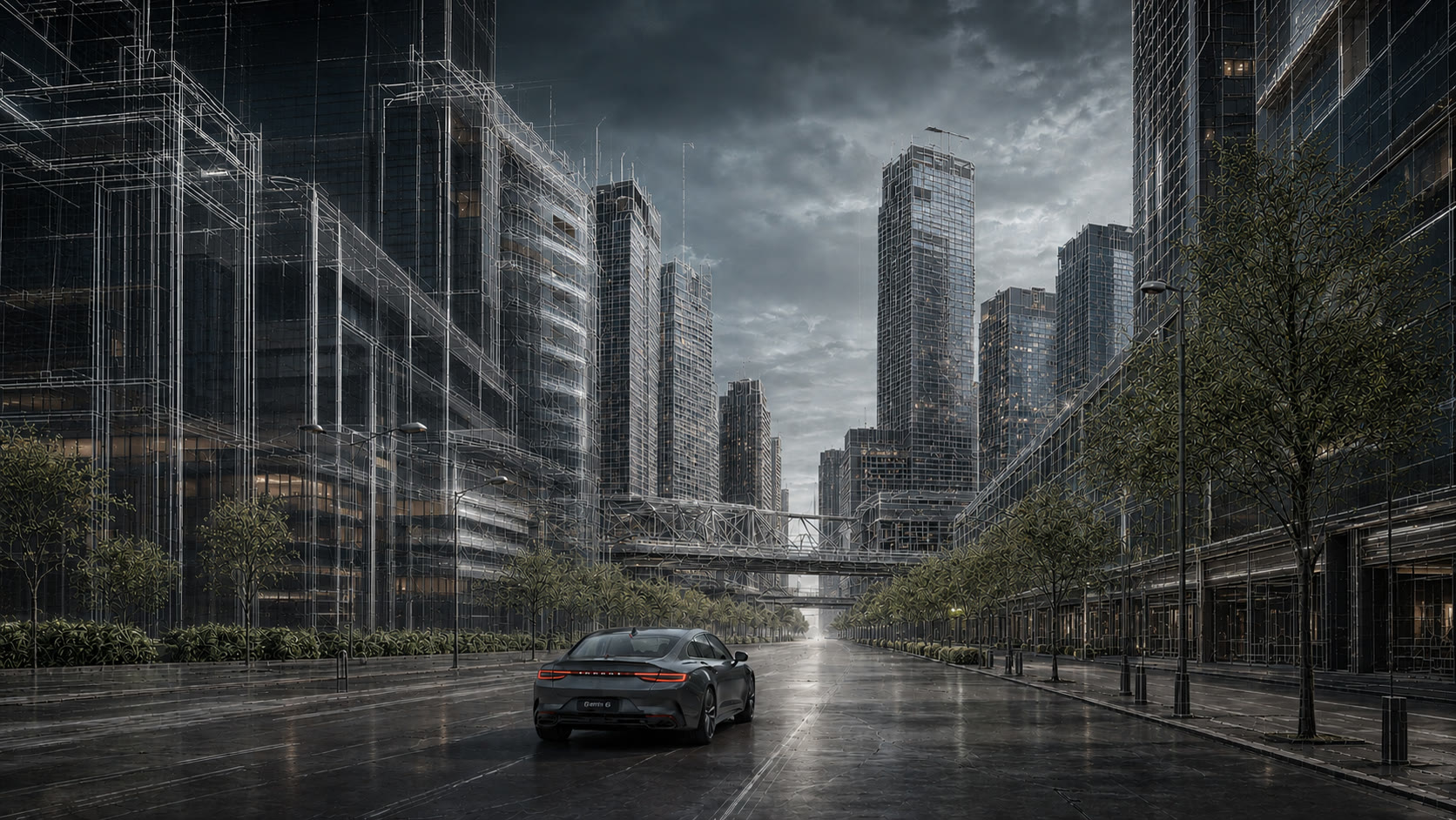
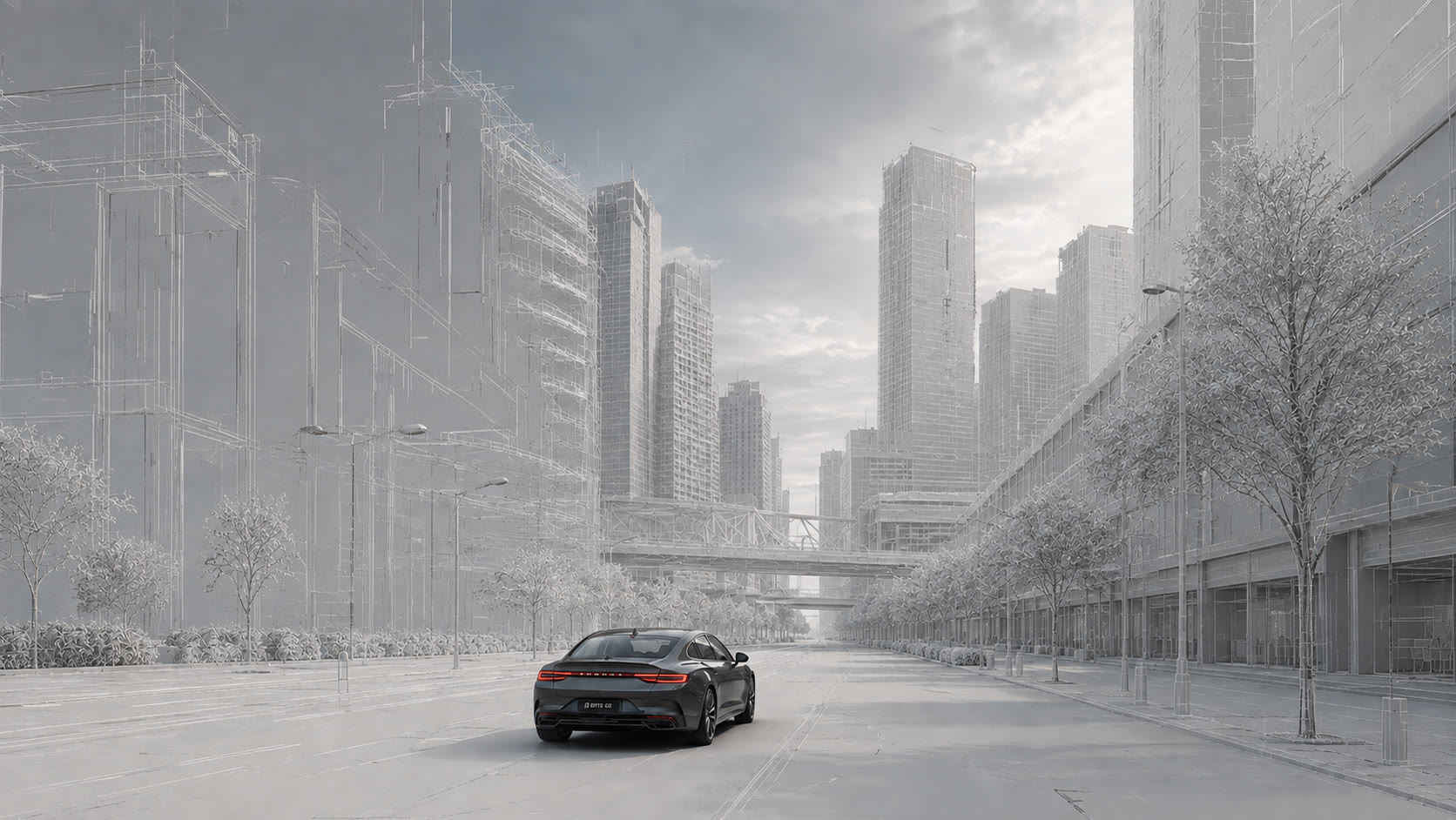
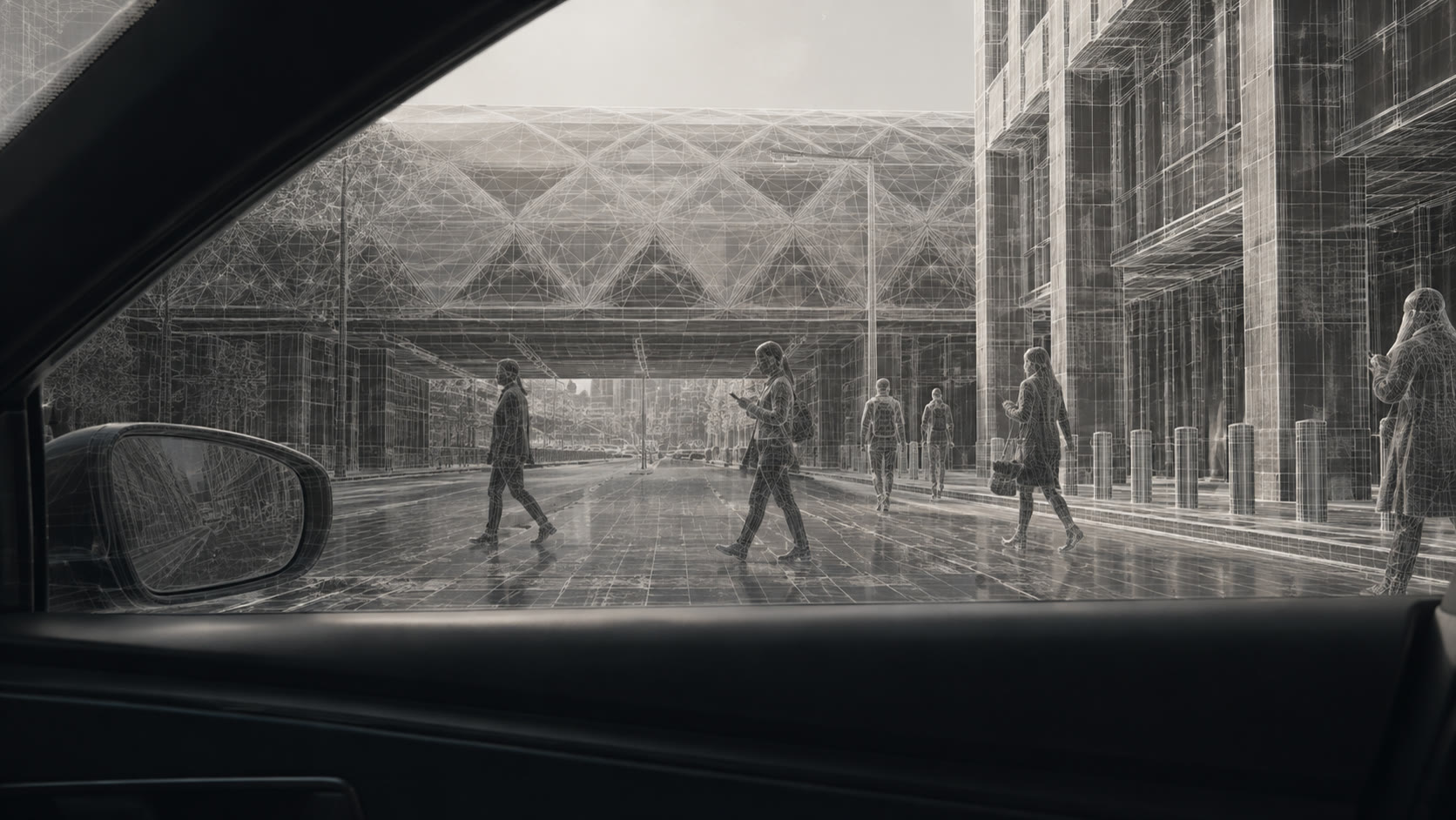
The unfinished city needs its own visual language. We will test graphite line, architectural wireframe and half-rendered surfaces, then lock the look that feels most like a demo turning into a record: rough, but already beautiful.


The song and the city are built from the same stems. Each new part of the arrangement unlocks one layer of the image, so the audience hears the transformation before they see it.

Line work gains weight. Kerbs, façades and trees stop being outlines.

Volume and shadow. The park fills in around a single bench.

Colour washes through the streets, one building at a time.

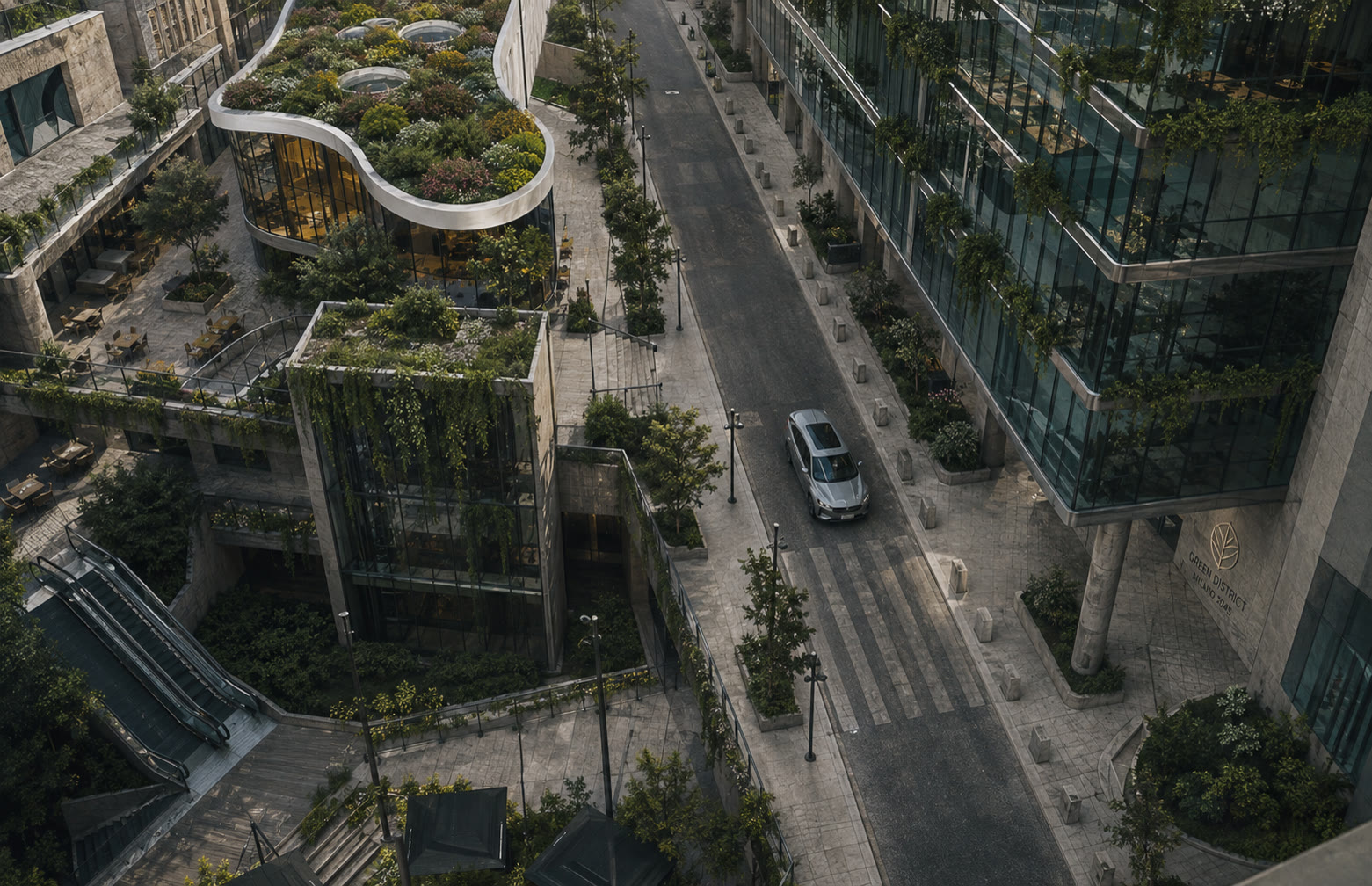
Life arrives: people, birds, reflections, green on every roof.

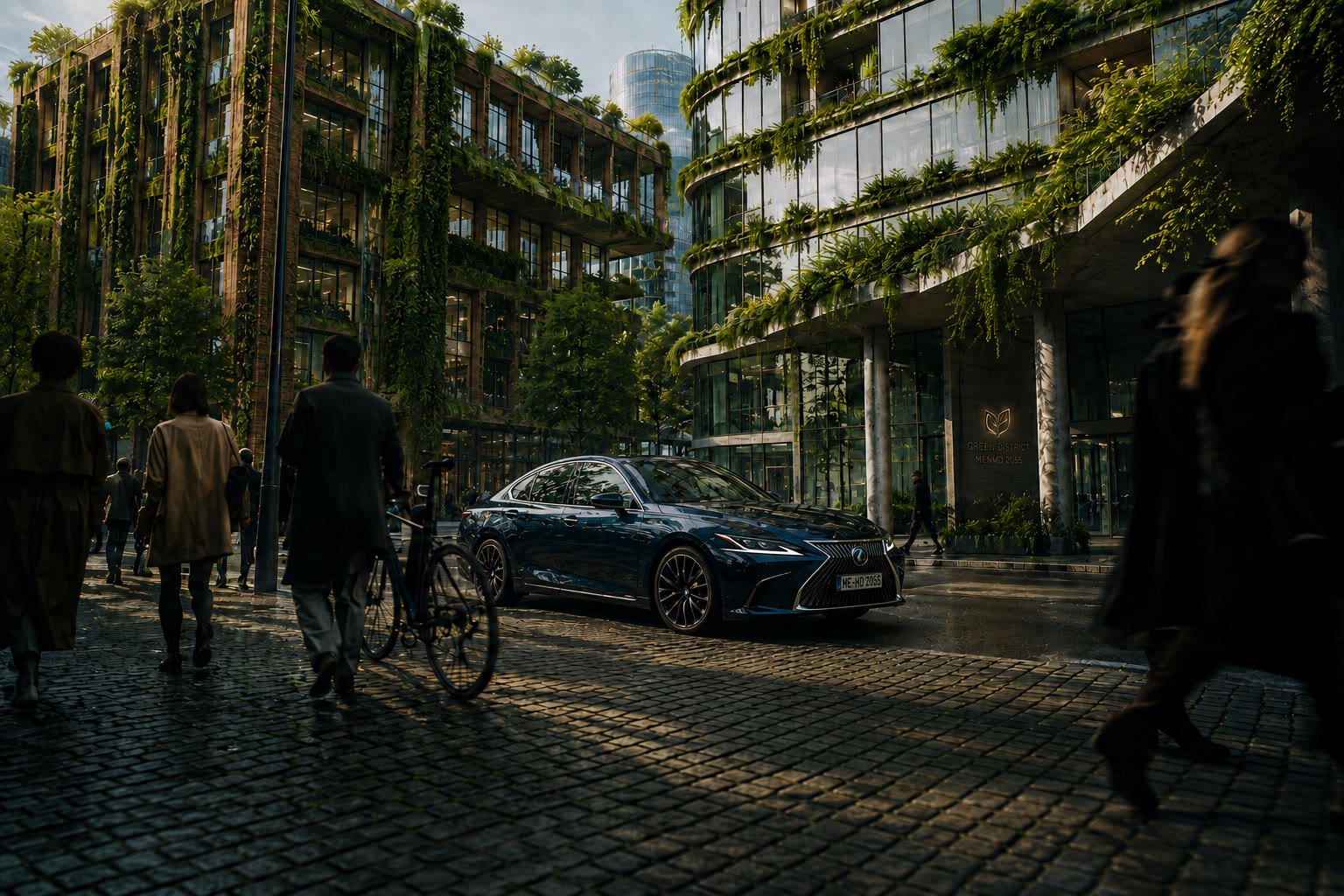
The finished city is ours, only further along: more green on the rooftops, softer materials, light that feels considered. We design it from the real locations we scout, so the future always starts from somewhere true.


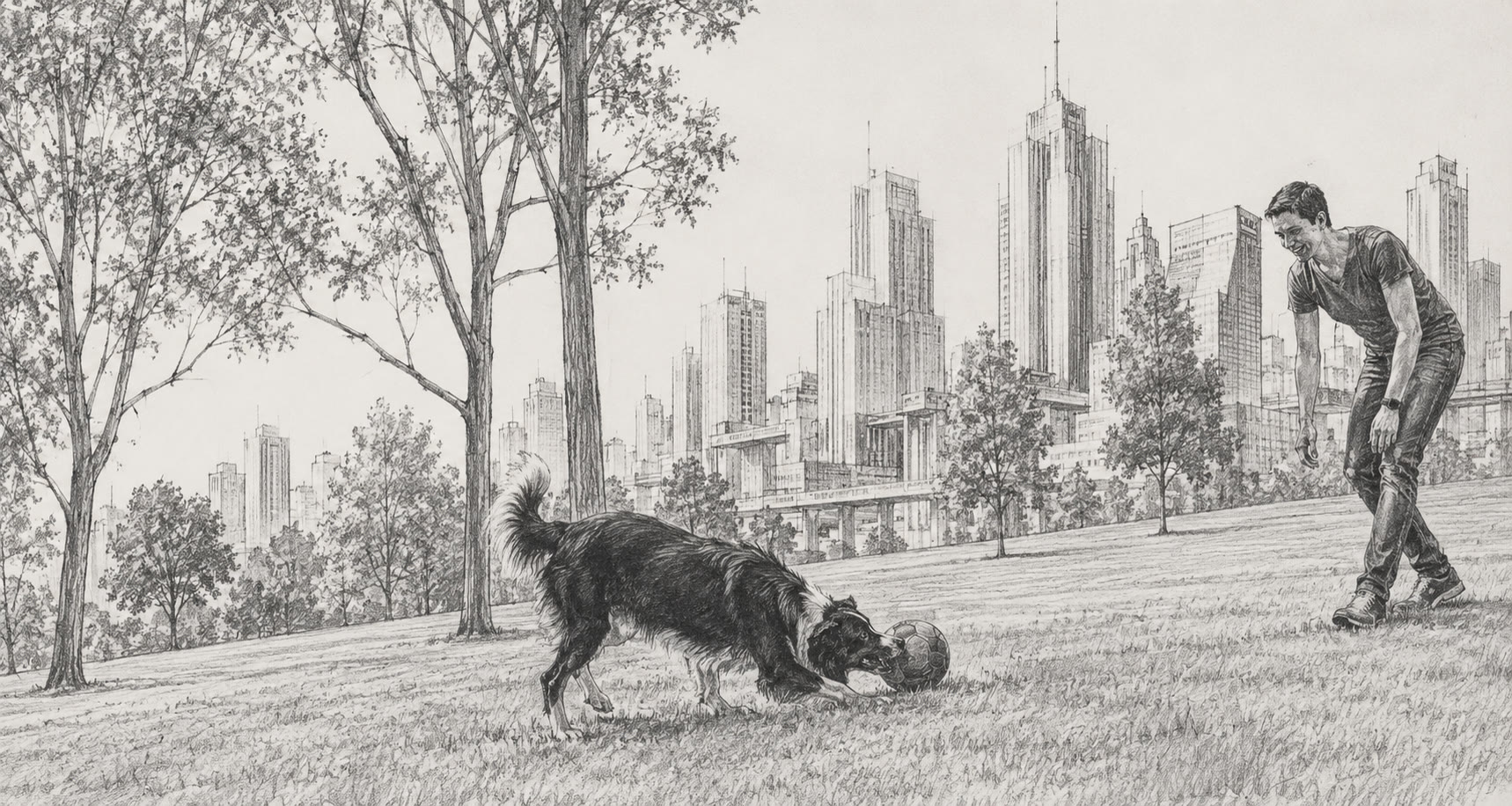
Night. She drives through a city that exists only as pencil lines. She hums the same four notes over and over, trying them different ways.


She finds the bassline. On the first note, the lines around the car thicken into volume: kerbs gain depth, trees gain trunks, a park fills in around one bench.

Strings arrive and so does colour, washing through the façades. A sketched man and his sketched dog become real mid-stride; the dog leaps into his arms.

She sings the line out loud. The whole city resolves at once, finished and alive. At a red light she laughs at herself and hits record.
The more real the foundation, the more believable the magic. We keep the car, the road and the light photographic, and let post production redraw everything the story needs.
Car, road and foreground captured in camera for true reflections, motion blur and lens behaviour.

Every location is scanned and plated so the city can be redrawn precisely around the car.

AI-assisted look development lets us explore sketch styles in days, not weeks.

Matte painting and CG take the chosen look to final, frame by frame, stem by stem.
“Room tone is the sound a place makes when nobody is talking. Every film crew records it. Almost nobody listens to it.”
In the final film the music stops on purpose. A HALDEN cabin is quiet enough to hear what has always been there.
Wings over a field, timber settling in a barn, a front door, a thousand birds turning at once. The world has been playing all along.
High above a country road through wildflowers. A father turns the music down; his daughter presses her ear to the glass.
We dive into the field, through stems and petals, until one wing-beat becomes the only sound in the film.
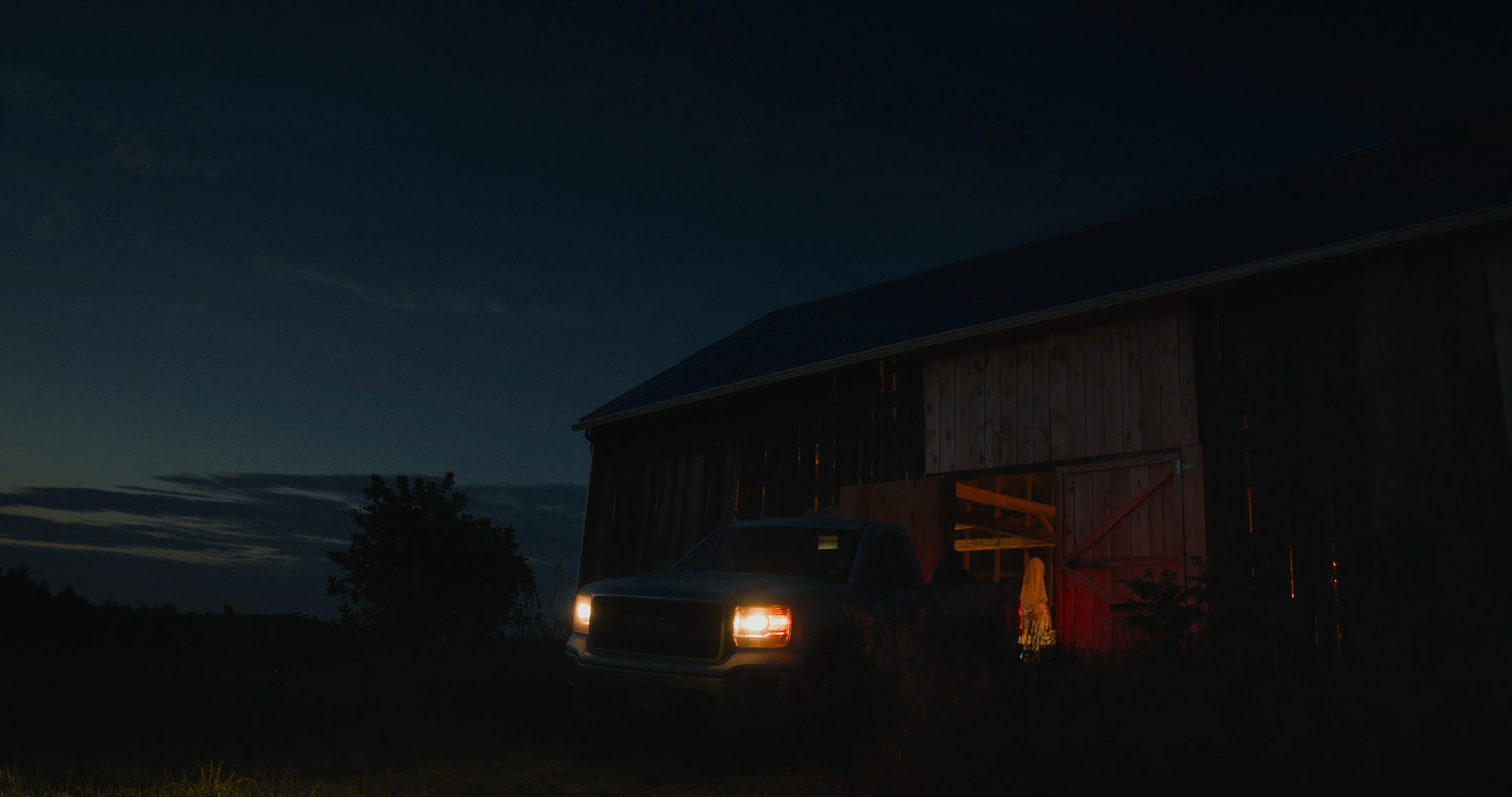
A couple drives into an old barn at blue hour. Engine off. Silence, then the building itself: beams creaking, dust drifting through moonlight.
He looks up. Through the broken roof, the Milky Way.

A driveway at dusk. He is back from a week away. Before either of them speaks we hear it: gravel underfoot, the click of the door, her laugh from the porch.
A man alone on a ridge at the end of the day. A murmuration turns over the valley in total silence, then the rush of ten thousand wings reaches us at once.
Three films, one idea: a car quiet enough to change what you hear. What excites me most is what comes next, shaping the music, the performances and the world of each film together.
This is a speculative project created for portfolio purposes. HALDEN is a fictional brand. All film stills and clips are used as visual references for mood and illustration only, and remain the property of their respective owners.